The Autumn Strategy: Chase the Color Downhill
The single most useful fact about Nikko foliage: it peaks three times, roughly two weeks apart, as the color descends the mountain.
1️⃣ Okunikko — late Sep to mid-Oct
The high plateau turns first: the Senjogahara marshland goes gold and the forest around Yudaki and Ryuzu reddens while Tokyo is still in shirtsleeves. Thinner crowds than the later windows — the connoisseur's pick.
2️⃣ Chuzenji & Kegon — mid to late Oct
The headline act: peak color around Lake Chuzenji and the amphitheater framing Kegon Falls. This is the postcard — and the busiest fortnight of the Nikko year, on the road and at the rails.
3️⃣ Nikko town — late Oct to early Nov
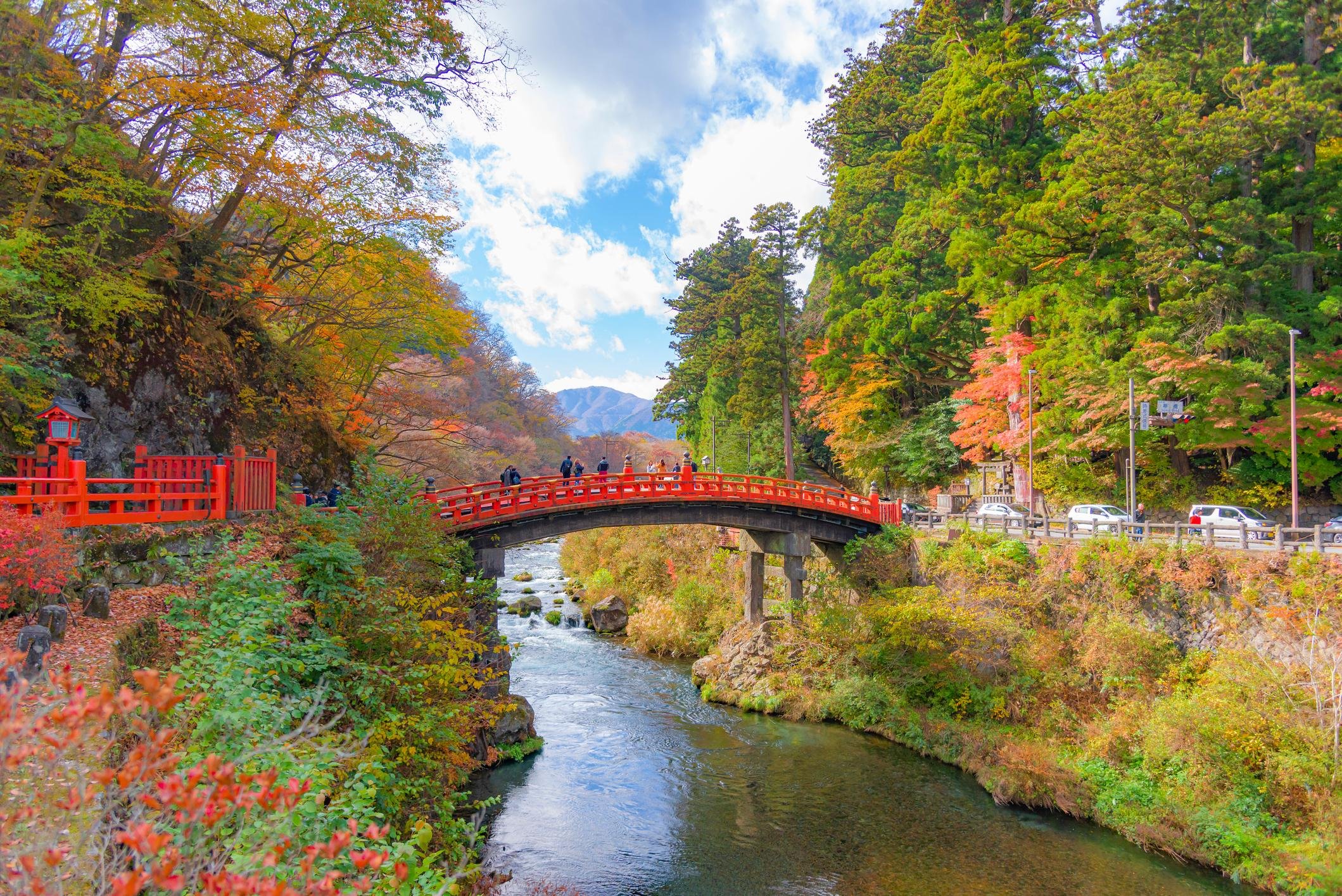
Color reaches the shrine forests and river valley last. If your dates miss the lake's peak, the town area catches you — Toshogu under maples is no consolation prize.
Time it right and you can catch peak color somewhere in Nikko for a solid month. The catch is the road: all traffic to the lake climbs the Irohazaka winding road, whose foliage-season jams are legendary — on peak weekends the 48 hairpins can take multiples of the normal 45–50-minute bus ride. The counter-move is boring and effective: go on a weekday, and go early — first train out of Tokyo, on a bus up before mid-morning. Train and bus specifics are in the getting-there guide.
Season by Season
What each part of the year actually gives you at the falls, the lake, and the marsh.
Spring arrives late at 1,269 m — while Tokyo finishes its cherry blossoms, Okunikko is still thawing. Through May the forest floods with fresh green, snowmelt fattens the falls, and the Lake Chuzenji sightseeing cruise resumes for the season (mid-April, as of mid-2026). Comfortable walking weather, moderate crowds outside the Golden Week holidays in late April–early May.
Early summer belongs to the highlands: azaleas bloom, the marsh greens up, and the rainy-season overcast keeps casual crowds away while keeping water levels high. A good month for the Senjogahara boardwalk — pack a rain shell and enjoy having it largely to yourself on weekdays.
When Tokyo is at its stickiest, Okunikko is the cool room: the lake and marsh sit at 1,269–1,400 m and run noticeably cooler than the city. Full green forest, strong flow over the falls, boats on the lake — this is Nikko as summer resort, which is exactly what it historically was. Weekends draw domestic day-trippers; weekday mornings stay calm.
The main event, staged by elevation: upper Okunikko late September–mid October, Lake Chuzenji and Kegon Falls mid–late October, Nikko town late October–early November. The full strategy — including how to dodge the Irohazaka jams — is in the autumn section above. Treat all windows as typical rather than guaranteed; they shift with each year's weather.
The quiet season, and quietly spectacular: in January and February Kegon Falls partially freezes, the side seepage hardening into blue-tinted ice columns around the thinned central stream. Crowds are at their year-round low. Two practical notes, as of mid-2026: the elevator to the lower deck runs 9:00–16:30 December through February (shorter than the warmer months), and the lake cruise does not operate. How Kegon's frozen face compares to the other falls in winter is touched on in the waterfalls guide.
Honestly the weakest window: the ice is decaying, the green hasn't arrived, and the cruise is still docked. If March is what you have, it still works — the falls flow, the crowds are thin, and Lake Chuzenji under late snow has its own austerity — but if you can shift two weeks either way, do.
Tours Run in Every Season
The standard Kegon – Chuzenji – Toshogu loop operates year-round; the scenery does the changing. In foliage season, a coach tour also means the Irohazaka traffic is the driver's problem.
Nikko: Kegon Falls, Lake Chuzenji & Toshogu Temple
Full-day coach tour from Tokyo covering the exact sights this page schedules — falls, lake, shrine — with a bilingual guide. Fixed timing at each stop is the trade-off; in October, book ahead.
Check AvailabilitySeasonal FAQ
The timing questions people actually ask.
In stages, by elevation. Okunikko — Senjogahara and Yudaki — turns late September to mid-October; Lake Chuzenji and Kegon Falls peak mid-to-late October; Nikko town and the shrine area follow late October to early November. Treat the windows as typical, not guaranteed — timing shifts with each year's weather.
Yes, if you want the falls to yourself. In January and February the falls partially freeze into blue-tinted ice columns around a thinned central stream, and crowds drop to their lowest of the year. The elevator runs shorter hours in winter — 9:00–16:30 December through February, as of mid-2026 — and getting up the mountain is straightforward; see the getting-there guide.
Legendarily bad — the 48 hairpin curves are the only road up, and on peak-color weekends the climb can take multiples of the usual 45–50-minute bus ride. Go early on a weekday, or take the first train from Tokyo and be on a bus up before mid-morning.
No — the sightseeing cruise operates mid-April through November 30, as of mid-2026. In winter the lake is still worth the stop for the snow scenery; what else works on the shore year-round is in the Lake Chuzenji guide.
Mid-October, if crowds don't scare you: that is when the amphitheater around Kegon Falls and Lake Chuzenji peaks. If they do, early October in upper Okunikko or a clear January weekday for the ice are the two best trades of scenery for solitude — the season-by-season breakdown above weighs each option.
Better than most people expect. Okunikko sits at 1,269–1,400 m and runs noticeably cooler than Tokyo, so the lake, the falls, and the marshland boardwalk work as a highland escape when the city is at its stickiest. Full water flow also flatters every drop in the waterfalls lineup.
Yes — the standard Kegon Falls, Lake Chuzenji and Toshogu route operates in every season, with the scenery doing the changing. The most-reviewed group tour on that loop is rated 4.6 from over 2,100 reviews, from around $109 per person, as of mid-2026 — see the booking section.