One Kana Per Curve
🈁 The ABC Slope
Irohazaka (いろは坂) takes its name from the iroha syllabary — the classical ordering of the Japanese kana, which begins i, ro, ha the way our alphabet begins A, B, C. The road has 48 hairpin curves, one for each kana, and each curve carries a signboard with its character. Ride the bus with your eyes on the roadside markers and you can count your way through the old alphabet as the valley drops away below.
It is a rare thing: a piece of transport infrastructure that is also a destination. In autumn it is arguably the foliage drive of the Kanto region.
🔁 The One-Way Pair
Irohazaka is really two roads, and both are one-way:
- Irohazaka No.2 climbs. All uphill traffic from Nikko town to the plateau uses it. The Akechidaira lookout sits near its top.
- Irohazaka No.1 descends. All downhill traffic returns on the older road.
- You never meet oncoming traffic on the hairpins — which is exactly why full-size tour buses can run the road all day.
The climb connects Nikko town at roughly 600 meters with the Chuzenji plateau at 1,269 meters — the elevation of Lake Chuzenji itself. That is a serious altitude gain in a short horizontal distance, and the hairpins are how the road earns it.
Riding It: Bus, Car, or Tour
🚌 By Bus (Most Visitors)
The Tobu bus from Tobu-Nikko Station to Chuzenji Onsen takes about 45–50 minutes as of mid-2026, with Irohazaka as the centerpiece of the ride. Practical notes:
- Window seat tip: riders often aim for a left-side window seat going up, on the logic that the valley views open on that side through the climb. Treat it as a tip worth trying, not a guarantee — sightlines shift curve by curve.
- Motion sickness is real on 48 consecutive hairpins. If you are prone to it, sit forward, look far ahead rather than at the roadside, and skip the pre-ride snack.
- Full route options, passes, and where the bus fits in the journey from Tokyo are in the getting-there guide.
🚗 By Car (The Drive Itself)
Driving Irohazaka is a bucket-list item for Japanese drivers, and the one-way system makes it far less stressful than it looks. Etiquette that keeps it that way:
- Hold your lane through the hairpins and let faster traffic past where the road widens — locals know the curves, visitors do not.
- No stopping on the curves for photos. Use the Akechidaira parking area near the top of No.2 instead — that is what it is for.
- Engine-brake on the descent (No.1). Riding the brake pedal down 48 curves is how brakes fade.
Group day tours from Tokyo ride Irohazaka as part of the route — you get the road with none of the driving.
Autumn: The Best and Worst Time
🍁 The Foliage Drive of Kanto
In mid to late October, the slopes around the curves turn red and gold, and Irohazaka becomes one of the most famous foliage sights in eastern Japan. It also becomes one of its most famous traffic jams: on peak weekends the climb can slow to a crawl, and the legendary tailbacks are part of Nikko folklore. If autumn is your reason for coming, plan the timing like it matters — because here it does:
- Go on a weekday if you possibly can. The gap between a peak Saturday and a Tuesday is measured in hours of queueing.
- Take the first bus of the morning from Tobu-Nikko Station. Early departures beat the day-tripper wave up the mountain.
- Month-by-month color timing for every level of the mountain is in the seasons guide.
🚡 Akechidaira, Near the Top
Near the top of Irohazaka No.2 sits the Akechidaira plateau — a parking area and lookout that is the natural pause point on the climb, with big views back down the valley you just gained.
One thing to know before you build plans around it: the Akechidaira Ropeway is closed for a full renewal from January 16, 2026 to August 31, 2027 (as of mid-2026), so the famous upper observation platform is off the menu for now. The parking-area viewpoint itself stays reachable by car and bus on the way up and is still worth the stop. The full story — what the ropeway normally offers and what to do instead — is on the Akechidaira Ropeway page.
Ride Irohazaka Without Driving It
The standard Nikko day tour from Tokyo rides Irohazaka as part of the route — up the 48 curves to Kegon Falls and Lake Chuzenji, with Toshogu on the same day and no rental car, no parking, no descent to manage.
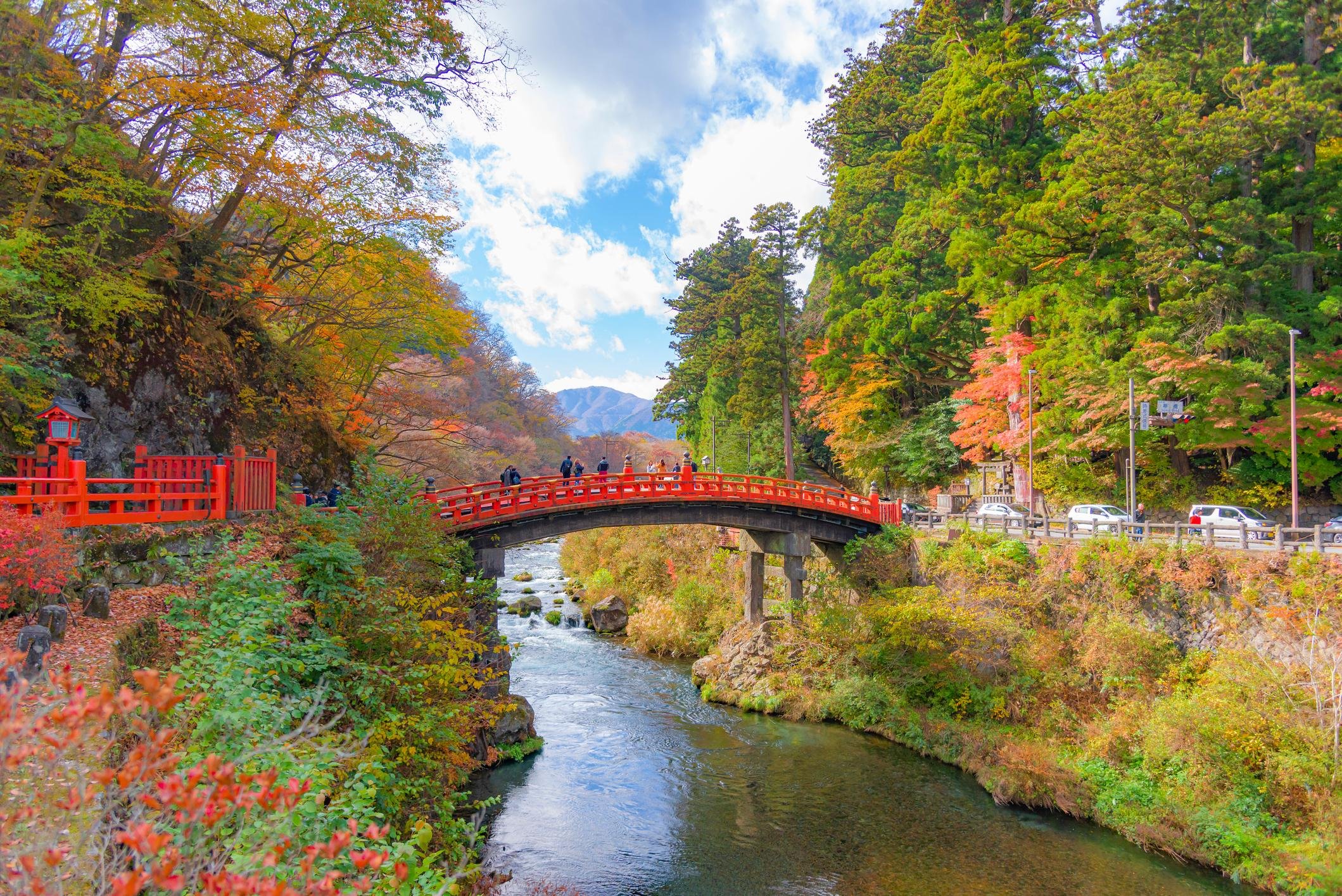
Nikko: Kegon Falls, Lake Chuzenji & Toshogu Temple
Full-day coach tour from Tokyo covering the three headline stops — the Irohazaka climb is the ride between them. Free cancellation.
From $87 per person
Check availabilityComparing group vs private options? All Nikko tours and prices are on the booking section.
Irohazaka FAQ
The questions people ask before the first hairpin.
The road's 48 hairpin curves are named after the iroha syllabary — the classical Japanese ordering of the kana, which begins i, ro, ha. Each curve carries a marker with its own kana, so you can count your way through the alphabet as you climb — the full story is in the one-kana-per-curve section. "Iroha" plus "zaka" (slope) literally means the ABC slope.
Not on the same road. Irohazaka is a one-way pair: No.2 carries all uphill traffic from Nikko town to the Chuzenji plateau, No.1 carries all downhill traffic back. You never meet oncoming cars on the hairpins — which is what makes the road workable for tour buses. Both roads are plotted on the Okunikko map.
The Tobu bus from Tobu-Nikko Station to Chuzenji Onsen takes about 45–50 minutes as of mid-2026, with Irohazaka as the middle chunk of the ride. In foliage season the same trip can take considerably longer. Timetable strategy and pass options are in the getting-there guide.
The Chuzenji/Kegon level that Irohazaka climbs to peaks mid to late October. The higher Okunikko areas above (Senjogahara, Yudaki) turn earlier — late September to mid October — and Nikko town below turns later, into early November. The mountain colors from the top down; the month-by-month picture is in the seasons guide.
No. The ropeway at the Akechidaira stop near the top of No.2 is closed for a full renewal from January 16, 2026 to August 31, 2027 (as of mid-2026). The observation deck at the Akechidaira parking area itself stays reachable by car and bus — what to do instead is covered on the Akechidaira Ropeway page.
The NIKKO PASS ALL AREA (¥8,000 adult / ¥4,000 child, 4 days, as of mid-2026) covers the area buses including the climb to Chuzenji Onsen — the base for Lake Chuzenji — plus the Asakusa round trip. The cheaper WORLD HERITAGE AREA pass covers the town area only and does not reach Chuzenji or Okunikko.
Keep Planning
- Lake Chuzenji — what is waiting at the top of the climb: the cruise, Tachiki Kannon, and the lakeside walk.
- Akechidaira Ropeway — the 2026–27 closure explained, and the viewpoints that stay open.
- Getting There — Tobu vs JR from Tokyo, passes, and the bus legs.
- Seasons Guide — foliage timing by elevation, winter ice, and month-by-month planning.