Two Levels, One Park
Nikko National Park has no gate and no entry fee — you simply arrive, and pay only for what you visit inside it (shrine admissions, the Kegon Falls elevator, the lake cruise). What confuses first-timers is the geography, and it is worth 30 seconds:
- The lower level (~600 m): Nikko town and the World Heritage zone — Toshogu, Rinno-ji, Futarasan Shrine, the Shinkyo Bridge. Reached directly by train; see the getting-there guide.
- The upper level (1,269 m and up): Okunikko — Lake Chuzenji, Kegon Falls, Senjogahara, Yumoto Onsen. Reached only via the Irohazaka winding road, by bus or car.
That altitude split drives everything: the weather, the staggered autumn color, and why "seeing Nikko" properly takes more than a quick shrine stop.
The Four Zones
World Heritage Zone
- Toshogu — mausoleum of Tokugawa Ieyasu, enshrined 1617; UNESCO-listed since 1999 together with Rinno-ji and Futarasan Shrine
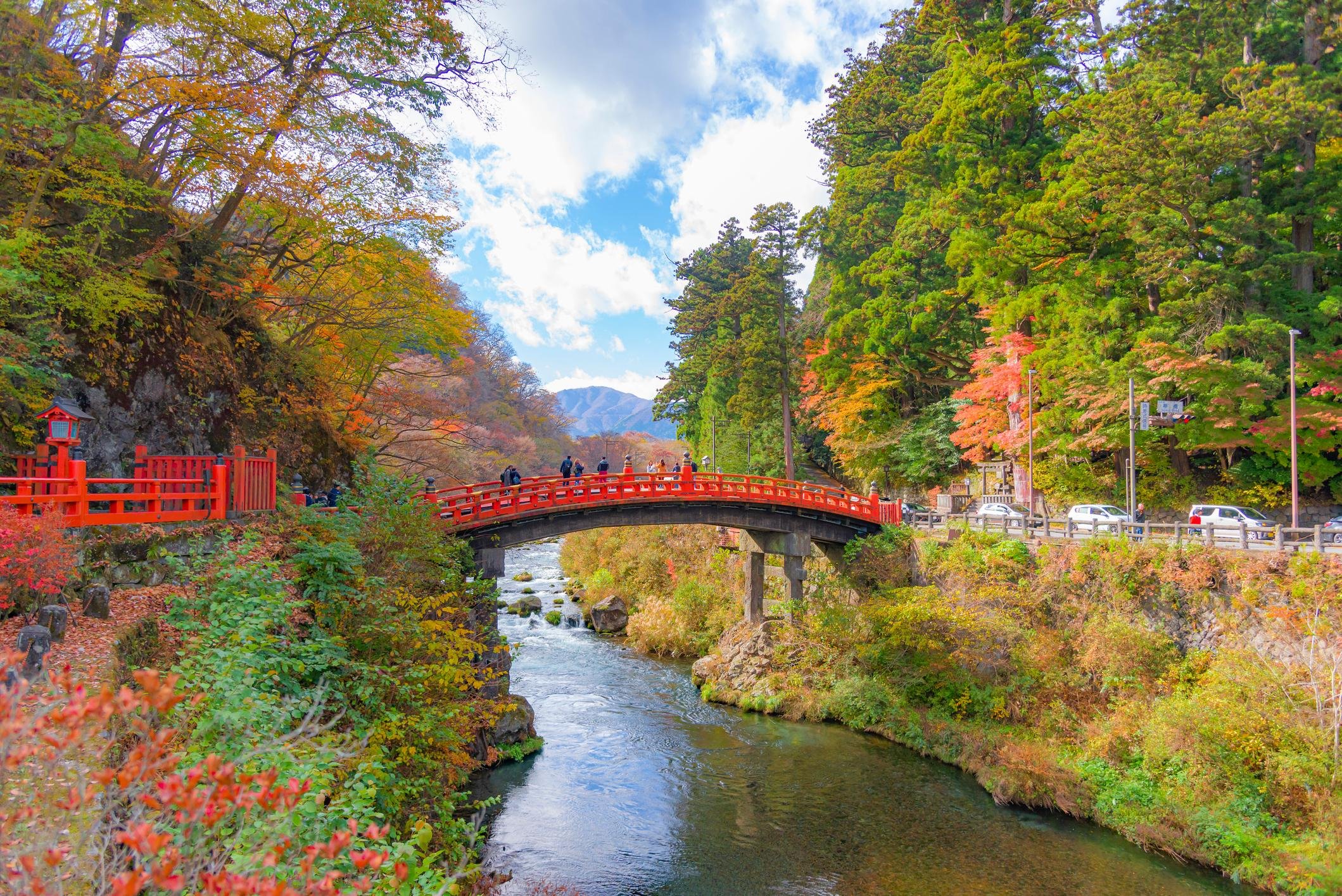
- The Shinkyo Bridge at the shrine approach
- Altitude ~600 m — walkable from the stations, no mountain bus needed
Chuzenji / Kegon Zone
- Kegon Falls — 97 m single drop, the lake's only outlet, one of Japan's three great waterfalls
- Lake Chuzenji — 1,269 m, formed ~20,000 years ago by the Mt. Nantai eruption; cruise runs mid-April–Nov 30
- Chuzen-ji Temple's Tachiki Kannon on the east shore
Senjogahara / Yudaki Zone
- Senjogahara — ~400 ha marshland plateau at ~1,400 m
- Boardwalk hike between Ryuzu Falls and Yudaki, about 2 hours
- Ryuzu's 210 m twin cascade viewable free from the teahouse
Yumoto Onsen Zone
- Hot-spring village at the top of the road, on Lake Yunoko
- Yudaki — the 70 m lava-face fall that drains Lake Yunoko
- The natural overnight base for a two-day visit
All four waterfalls — Kegon, Ryuzu, Yudaki and Kirifuri (75 m, east of town) — are compared side by side in the Nikko waterfalls guide.
One Day: The Classic Circuit
Toshogu in the morning, up Irohazaka, Kegon Falls, then the Lake Chuzenji shore — this is the proven day and exactly what the group tours run. It hits the park's two most famous sights and one zone of the highlands without rushing any of them.
Skip: Senjogahara and Yumoto. They deserve unhurried time you will not have.
Two Days: Add the Quiet Half
Day one as above; overnight at Chuzenji or Yumoto. Day two: the Senjogahara boardwalk between Ryuzu Falls and Yudaki (~2 hours of flat, spectacular walking), a soak at Yumoto, and Kirifuri Falls on the way out if you have the energy. This is the version that feels like a national park rather than a sightseeing run.
Wildlife: The Practical Version
The animals you are most likely to meet are Japanese macaques, especially around the Chuzenji area. They are wild, bold, and experienced with tourists: do not feed them, keep food out of sight, and keep bags zipped around the lakefront and parking areas. Photograph from a distance and they are a highlight; wave a snack around and they are a problem. On the quieter trails, standard Japanese-mountain rules apply — stay on the boardwalks in the marshland, both for your sake and the habitat's.
See the Park's Greatest Hits in a Day
Nikko: Kegon Falls, Lake Chuzenji & Toshogu Temple
The one-day classic circuit — both levels of the park, transport from Tokyo and a bilingual guide included. Free cancellation.
Want Senjogahara or a custom route? Compare private options in the day-trip guide.
Nikko National Park FAQ
Planning basics, answered straight.
Yes — there is no park gate and no entry fee. You pay only for individual attractions inside it: shrine admissions in the World Heritage zone, the Kegon Falls elevator (¥570 as of mid-2026), the lake cruise, and so on. The real cost of a visit is transport, which is broken down in the getting-there guide.
One full day covers the headline circuit: Toshogu, Kegon Falls and Lake Chuzenji. Two days lets you add the Senjogahara boardwalk, Yudaki, a Yumoto Onsen soak and Kirifuri Falls without rushing. If you only have the one day, the group-vs-private options are compared in the Nikko day trip guide.
Altitude. Nikko town and the World Heritage shrines sit at around 600 m; Okunikko ("inner Nikko") is the highland zone above the Irohazaka climb — Lake Chuzenji at 1,269 m, Senjogahara at about 1,400 m, and Yumoto Onsen beyond. The 48-hairpin road that links the two levels has a guide of its own — see the Irohazaka page.
Yes — Japanese macaques are a common sight around the Chuzenji area. Treat them as wildlife: do not feed them, keep food out of sight, and keep bags zipped, especially around the lakefront and parking areas. Sightings are most frequent around the lake — more in the Lake Chuzenji guide.
It descends with the altitude: Okunikko (Senjogahara, Yudaki) turns late September to mid-October, the Chuzenji and Kegon Falls level mid-to-late October, and Nikko town late October to early November. So a well-timed trip can catch color twice. The month-by-month breakdown is in the seasons guide.
The scheduled group tours cover the classic circuit — Toshogu, Kegon Falls, Lake Chuzenji — and do it well. No fixed group route reaches Senjogahara or Kirifuri as of mid-2026. If you want the quieter zones in a single day, book a customizable private tour (from $70 per person) and set the route yourself.